It feels like there’s never enough time. Work piles up, emails flood in, and your personal life gets squeezed. Then comes the nagging worry, the knot in your stomach that says you’re not doing enough.
This constant pressure can really wear you down. You might even feel guilty for wanting a break. But what if technology could actually help ease that burden?
What if AI, often seen as a driver of more work, could also be a key to more peace? We’re going to explore just that.
AI tools offer new ways to manage tasks and reduce stress. They can automate jobs, help with planning, and provide support. This can lead to less worry and a better mix of work and personal time.
What is AI and How Does It Help Our Minds?
AI stands for artificial intelligence. Think of it as smart computer programs. These programs can learn and make decisions.
They can do many things that used to need a human brain. This includes understanding what you say, writing text, and even creating images. Many people worry AI will take jobs.
But AI can also be a helpful partner. It can handle boring, repetitive tasks. This frees up your time and mental energy.
For those struggling with worry, this is a big deal.
When you feel overwhelmed, your mind races. You might think about all the things you need to do. AI can help capture those thoughts.
It can organize them into lists. This makes them seem less scary. Instead of a giant cloud of stress, you see clear steps.
This simple act of organizing can calm your mind. It’s like cleaning up a messy room. Suddenly, it feels much more manageable.
AI tools can act as your digital assistant.
They can track deadlines for you. They can send you reminders. Some AI can even help you write emails faster.
Imagine cutting down your inbox time. That’s a direct win for your peace of mind. It’s about making technology work for you.
It’s not about more screens or more demands. It’s about getting help with the busywork. This allows you to focus on what truly matters.
It helps you reclaim moments for yourself.
The goal is not to replace human effort entirely. It’s about smart support. It’s about finding ways to lighten the load.
For example, AI can help you plan your day. It can suggest when to take breaks. It can even help you schedule time for hobbies.
This proactive approach stops stress before it starts. It builds a buffer against the daily grind. This is where AI truly shines for mental well-being.
My Own Brush with the Overwhelm Monster
I remember a time, not too long ago, when my calendar was a disaster. I was juggling a big project, client calls, and personal appointments. Every notification on my phone felt like a tiny explosion.
I’d stare at my to-do list, and my brain would just freeze. I started feeling this constant, low-level panic. It was like a fog I couldn’t shake.
I’d lie awake at night, my mind replaying every missed email or forgotten task. It felt like I was drowning in small things.
One evening, after a particularly rough day, I was scrolling through apps. I stumbled upon an AI writing assistant. I thought, “What could this possibly do for me?” I was skeptical.
I typed in a few bullet points for an email I needed to send. In seconds, it drafted a whole message. It was clear and professional.
I was shocked. It took me maybe 15 minutes of frantic typing and deleting to usually do that. That night, I felt a tiny bit of that fog lift.
It was a small moment, but it felt huge. It showed me that maybe, just maybe, technology could be an ally.
That was the start. I began experimenting with other AI tools. I found one that helped me plan my social media posts.
Another helped me summarize long articles. Each small win chipped away at the mountain of tasks. It didn’t magically fix everything.
But it gave me back small pockets of time. It reduced the mental load. I could breathe a little easier.
The guilt about not being productive enough started to fade. I was being productive, just in a smarter way. This shift was profound for my own peace.
AI for Task Management and Efficiency
Smart Scheduling Tools
AI-powered calendars learn your habits. They find the best times for meetings. They can also block out focus time.
This prevents back-to-back calls.
Automated reminders go beyond simple alarms. They can analyze your schedule. They remind you based on travel time or task complexity.
Task breakdown assistants help you. They take a big project. They suggest smaller, doable steps.
This makes large goals less daunting.
Think about your typical workday. How much time do you spend on emails? How much time do you spend looking for information?
AI tools can dramatically cut this down. Many AI assistants can sort your inbox. They flag urgent messages.
They can even draft replies for common questions. This means less time staring at a screen, waiting. It means more time for deep work or, better yet, a break.
Some AI can help you plan your week. You tell it your priorities. It suggests a schedule.
It considers your energy levels. It might know you’re best at creative tasks in the morning. It will schedule those then.
Later, it might suggest simpler tasks. This smart planning reduces indecision. It stops you from wasting mental energy on “what next?”.
It’s like having a personal assistant who knows you well.
Consider project management. For teams, AI can track progress. It can identify bottlenecks.
It can even predict when a project might be late. This early warning system is invaluable. It allows for quick adjustments.
It prevents last-minute rushes. For an individual, AI can do similar things. It can monitor your own progress on personal goals.
It helps you stay on track without constant self-nagging.
The core idea here is efficiency. It’s not about doing more. It’s about doing what matters with less effort.
AI takes over the repetitive, low-value tasks. This is crucial for reducing anxiety. When you’re not constantly bogged down by small jobs, your mind is clearer.
You feel more in control of your day. This sense of control is a powerful antidote to worry.
AI for Focus and Reducing Distractions
Focus-Boosting Features
AI-powered website blockers learn which sites distract you. They can block them for set periods. Some use gentle nudges to keep you on track.
Noise-canceling apps use AI to filter background sounds. They help create a quiet workspace anywhere.
Smart notification managers learn what notifications are important. They silence the rest during focus times. This stops constant interruptions.
Distractions are a major source of anxiety. Every ping or pop-up pulls you away from your work. Then it takes time to get back into the flow.
AI can act as a shield against these distractions. It learns what pulls your attention. Then, it helps minimize those intrusions.
This allows for sustained focus. Deep work leads to better results. It also feels much more satisfying.
Imagine you’re writing a report. You need to concentrate. An AI tool can sense when you’re in “focus mode.” It can automatically silence non-essential alerts on your computer and phone.
It can even suggest closing unnecessary tabs in your browser. This creates a digital sanctuary for your work. It’s like putting up a “Do Not Disturb” sign for your digital life.
This focused time is incredibly valuable.
Some AI tools help with content creation itself. If you’re writing, AI can suggest better phrasing. It can catch grammar errors.
It can even help you structure your thoughts. This speeds up the writing process. It reduces the frustration of writer’s block.
When you’re not fighting with the words, you can be more creative. This reduces the stress associated with producing work.
The ability of AI to help us concentrate is a direct benefit to work-life balance. When you can get your work done more efficiently, you finish sooner. This means you have more time for other things.
You’re not staying late because you were constantly interrupted. You’re not feeling guilty about not finishing because of distractions. It’s about making your work time more productive.
This productivity then spills over into your personal life.
It’s important to remember that AI isn’t a magic bullet. You still need to set boundaries. But AI can be a powerful ally in enforcing those boundaries.
It’s a tool to help you build a more focused and less interrupted day. This focused approach is key to reducing the feeling of being pulled in too many directions.
AI for Mental Well-being and Emotional Support
Supportive AI Applications
AI-powered journaling apps can prompt you with questions. They help you explore your feelings. They can identify patterns in your mood.
Mindfulness and meditation apps with AI features can personalize sessions. They adapt to your stress levels.
Virtual companions offer a listening ear. They provide non-judgmental conversation. They are available anytime you need to talk.
AI chatbots for therapy can offer cognitive behavioral therapy (CBT) techniques. They help manage anxious thoughts.
The connection between stress and anxiety is clear. When we feel overwhelmed, our mental health suffers. AI is increasingly being used to provide support in this area.
While not a replacement for human therapy, AI tools can offer significant help. They can provide accessible, on-demand support. This is especially important for people who can’t easily access traditional mental health services.
Consider journaling. Many of us know journaling is good for us. But we don’t always know what to write.
AI can offer prompts. It might ask, “What made you feel stressed today?” or “What are you grateful for right now?” These prompts guide your reflection. They help you process emotions.
Some apps can even analyze your journal entries. They might point out recurring themes in your worries. This self-awareness is a powerful step in managing anxiety.
Meditation apps with AI can tailor your experience. If you report feeling very stressed, the app might suggest a longer, more calming session. If you’re short on time, it can offer a quick breathing exercise.
This personalization makes mindfulness more effective and less daunting. It meets you where you are, rather than forcing a one-size-fits-all approach.
Virtual companions and chatbots are also growing. They can offer a sense of connection. For someone feeling lonely or isolated, talking to an AI can provide comfort.
These systems are designed to be empathetic. They can help users practice social interactions. They can also offer coping strategies for difficult emotions.
It’s a safe space to express yourself without fear of judgment.
It is crucial to understand the limits of these tools. AI cannot replace a human therapist’s nuanced understanding. It cannot provide the same depth of connection.
However, for many, these AI tools serve as an important first step. They can bridge the gap between needing help and getting help. They offer a sense of immediate relief.
This relief can be vital in managing day-to-day anxiety. It helps make your personal life feel more peaceful.
Achieving Better Work-Life Balance with AI
Balancing Act Tips
Automate mundane tasks: Use AI to handle repetitive work. This frees up hours each week.
Schedule personal time: Treat personal appointments like work meetings. Use AI to find time slots.
Set clear boundaries: Use AI tools to manage notifications. They help you disconnect from work.
Delegate digitally: AI can act as a delegate for certain tasks. This reduces your direct involvement.
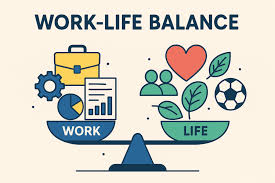
Work-life balance isn’t about a perfect 50/50 split. It’s about feeling in control. It’s about having enough time and energy for both work and your personal life.
AI can be a powerful force in tipping the scales towards balance. By automating tasks, you gain time. By managing distractions, you increase focus.
Both of these contribute to finishing work more efficiently.
When you finish your work earlier, you can actually switch off. You can be present with your family. You can pursue your hobbies.
You can simply relax without that nagging feeling that you should be working. This is the essence of improved work-life balance. It’s not about working less overall, but working smarter.
AI enables this smarter way of working.
Imagine you have an AI assistant that learns your workflow. It knows when you are most productive. It knows what tasks are time-sensitive.
It can help you prioritize your day. It might suggest tackling that important client report first thing. Then, it might schedule less demanding tasks for later.
This strategic approach ensures that you’re making the best use of your time. It reduces the feeling of constantly playing catch-up.
Furthermore, AI can help you plan your personal time. Some tools can integrate your work and personal calendars. They can identify conflicts.
They can suggest optimal times for family outings or personal errands. This proactive planning prevents your personal life from being an afterthought. It ensures that you are actively scheduling time for what recharges you.
The key is to view AI as a tool for empowerment. It’s not about handing over control. It’s about using AI to support your goals.
Your goal might be to reduce anxiety. Your goal might be to spend more time with loved ones. AI can be a valuable partner in achieving these very human goals.
It helps create space for a more fulfilling life.
Real-World Scenarios Where AI Helps
Scenario Snapshots
The Busy Parent: Sarah uses an AI meal planner. It suggests recipes based on what she has. It also creates a grocery list.
This saves her hours of thinking and planning each week. More time for her kids.
The Freelancer: Mark uses an AI tool to manage his invoices. It tracks payments and sends reminders. This means he spends less time on admin and more time on client projects.
He feels less stressed about finances.
The Student: Emily uses an AI summarizer for her readings. It pulls out the key points. This helps her understand complex topics faster.
It reduces the pressure of massive reading loads before exams.
The Remote Worker: David uses an AI to manage his notifications. It filters out non-urgent pings during his deep work hours. This allows him to stay focused and finish his tasks on time.
He logs off feeling accomplished.
Let’s look at a typical busy professional. They might work from home. Their children are also at home, perhaps with online schooling.
The lines between work and home blur easily. An AI tool can help create structure. It can schedule dedicated work blocks.
It can set reminders for breaks. It can even help manage family schedules by finding common free times.
Consider a creative professional. They might need hours of uninterrupted focus to write or design. AI can act as a digital gatekeeper.
It can block distracting websites and apps during these crucial periods. This protects their creative flow. It ensures they can produce their best work.
This reduces the frustration of losing valuable creative time to interruptions.
Another scenario is someone who travels often for work. Staying organized is a huge challenge. AI can help manage flight bookings, hotel reservations, and meeting schedules.
It can provide timely alerts for changes. It can even suggest optimal routes between appointments. This reduces the mental load of constant planning and logistics.
It allows them to focus on the purpose of their travel.
Even simple daily tasks can be eased. Think about managing personal errands. AI can help you group errands geographically.
It can suggest the most efficient route. It can remind you to pick up dry cleaning on your way home from work. These small efficiencies add up.
They reduce the mental clutter of remembering a dozen little things.
The common thread in these scenarios is that AI is used to reduce friction. It smooths out the rough edges of daily life. It automates the tedious.
It organizes the chaotic. This makes space for what truly matters. It helps individuals feel more capable and less overwhelmed.
This directly contributes to a healthier work-life balance and reduced anxiety.
When to Seek Human Help, Not Just AI
Knowing Your Limits
Severe Anxiety/Depression: If your anxiety is constant, severe, or impacts daily functioning, seek a therapist.
Suicidal Thoughts: This is a critical emergency. Contact a crisis hotline immediately.
Complex Emotional Needs: AI cannot provide the deep empathy or understanding of human connection.
Diagnosis: AI tools can offer insights but cannot diagnose mental health conditions.
While AI tools are incredibly helpful, they are not a substitute for professional human care. It’s crucial to know when to rely on technology and when to reach out to a person. If you are experiencing severe anxiety, depression, or any thoughts of harming yourself, AI is not enough.
These situations require the expertise and compassion of mental health professionals.
For example, if you find yourself constantly worrying. If this worry prevents you from sleeping or enjoying life. If you feel hopeless.
These are signs that you need more than an app can offer. A therapist can provide tailored strategies. They can help you understand the root causes of your anxiety.
They can offer support through difficult periods.
AI can be a great tool for self-improvement. It can help you track habits, manage tasks, and practice mindfulness. But it cannot replicate the therapeutic relationship.
It cannot provide the same level of personal connection and understanding. If you are struggling with a persistent mental health issue, please reach out to a doctor or a licensed therapist.
Many AI tools are designed to detect serious issues. Some wellness apps can flag concerning patterns in your mood or journal entries. They might then recommend you speak to a professional.
This is a vital safety feature. It ensures that technology can guide you toward appropriate human help when needed. It’s about using AI as a smart assistant, not a sole caregiver.
Remember, the goal of AI in well-being is to support you. It’s to make healthy habits more accessible. It’s to offer tools that can help manage daily stressors.
But for deeper, more complex challenges, human connection and professional expertise are irreplaceable. Trust your instincts. If something feels too big to handle alone, seek human support.
Quick Tips for Integrating AI into Your Life
Start small. Don’t try to implement every AI tool at once. Pick one area where you feel the most pressure.
Maybe it’s email management or task scheduling. Try an AI tool for that specific need. See how it works for you.
Give it a week or two.
Focus on tools that automate repetitive tasks. These are often the biggest drains on your time and energy. AI excels at handling these.
Look for AI that helps you organize information. This can be anything from summarizing meeting notes to sorting your digital files.
Use AI to create more intentional downtime. Set up AI to silence notifications during family dinner or your evening relaxation time. This helps you truly disconnect from work.
Make your personal time feel protected.
Experiment with AI for creative tasks. AI writing assistants can help you draft emails or social media posts faster. AI image generators can help visualize ideas.
This can spark new inspiration and make creative work less daunting.
Always review AI outputs. AI is a tool, not an infallible expert. Double-check its suggestions.
Make sure the writing sounds like you. Ensure the schedule it creates actually works for your life.
Set clear goals for what you want AI to help you achieve. Do you want to reduce email time by 30%? Do you want to have at least one hour of uninterrupted focus each day?
Having specific goals will help you choose the right tools and measure their success.
Frequently Asked Questions about AI and Well-being
Can AI really help reduce anxiety?
Yes, AI tools can help reduce anxiety by automating tasks, improving focus, organizing schedules, and providing access to mental wellness resources. By reducing the mental load and offering support, AI can contribute to a calmer state of mind.
Is using AI for work-life balance cheating?
No, using AI is not cheating. It’s using available technology to work smarter and more efficiently. Just like using a calculator for math, AI helps you manage your workload better.
This allows you to achieve a healthier balance between work and personal life.
How do I choose the right AI tools for my needs?
Start by identifying your biggest pain points. Are you overwhelmed by emails? Do you struggle with focus?
Look for AI tools specifically designed to address those issues. Read reviews and try free versions before committing to paid subscriptions.
Will AI replace human therapists or counselors?
No, AI is unlikely to replace human therapists. AI tools can offer valuable support, like guided exercises or initial screenings. However, they cannot replicate the empathy, intuition, and complex understanding that a human therapist provides for deep emotional work and diagnosis.
Are there privacy concerns with AI wellness apps?
Yes, there can be privacy concerns. Always read the privacy policy of any AI app you use. Look for apps that clearly state how your data is used and protected.
Opt for reputable developers and be cautious about sharing highly sensitive personal information.
Can AI help me feel more connected, or less?
AI can help in different ways. Some AI companions offer a listening ear, which can reduce feelings of loneliness. However, relying too heavily on AI for social interaction might decrease your motivation to seek genuine human connection.
It’s best used as a supplement, not a replacement, for human relationships.
How can AI help with time management specifically?
AI excels at time management by automating scheduling, setting smart reminders, prioritizing tasks, and even predicting how long tasks might take. It can learn your habits and suggest optimal times for different activities, helping you make the most of your day and avoid procrastination.
Finding Your Balance in the Digital Age
Navigating the demands of modern life can feel like a constant juggling act. The pressure to be productive, connected, and present can lead to significant worry. Yet, in this very digital age, we find powerful new allies.
AI tools are no longer just for tech giants. They are becoming accessible helpers for all of us. They can sort our tasks, guard our focus, and even offer a moment of calm.
By using them wisely, we can dial down the anxiety. We can build a more balanced life. It’s about smart support, not just more tech.